Tackling Apathy and Denial
Also catalogued elsewhere
Many climate communication efforts focus on changing individual behaviour or messaging but often ignore emotion and social context. Research shows feelings like fear, guilt, hope, and belonging strongly shape engagement and must be addressed. Effective work should empower people, use empathy, and invite participation rather than just urge action.
 Source: climate2020.org.uk
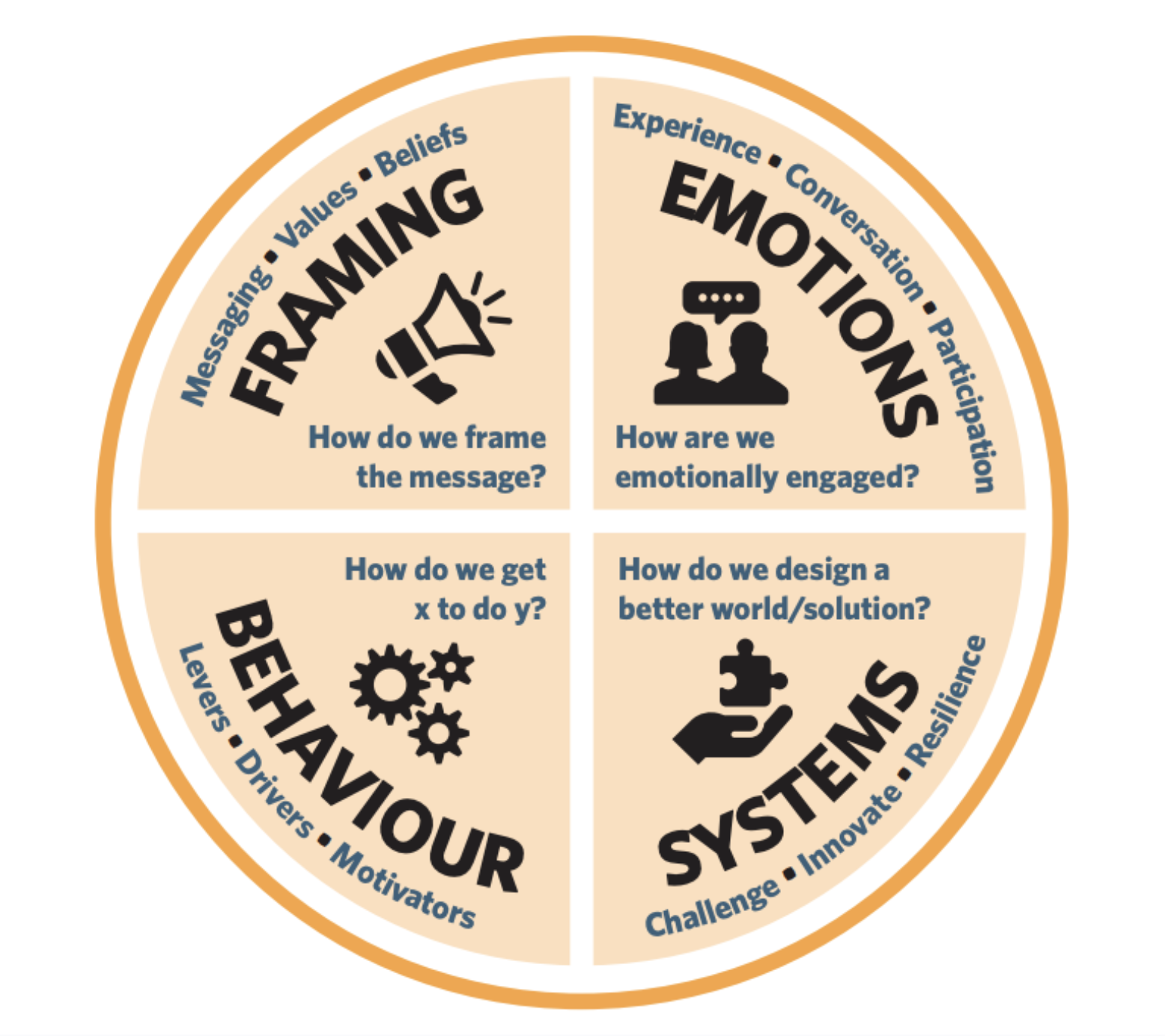
Our thinking on effective communicating with individuals tends to fall into one of four dominant orientations: behaviour, framing, systems and emotions.
The focus is less on identifying the right values, but on the conflicts or dilemmas that impede behavioural shifts, and how these conflicts are often socially influenced (identity, social norms, pressures, belonging).
Taking into account the extensive research into the power of intrinsic motivation, we can frame engaging with climate change issues in terms of empowerment, purpose, meaning and mattering. We can design our communications efforts in terms of invitation and inclusion, rather than exhorting people to take steps to change their behaviour.
the most effective way to help motivate people is to acknowledge the extent to which something may seem overwhelming, insurmountable or hard to imagine. Our ability to empathise and connect with people is of utmost importance.
Bastian and Loughnan discuss how connecting the act of eating meat with harm to animals can trigger intense cognitive dissonance. As a result, people will not only resist such awareness-raising, but will actually increase their consumption of meat as a way of reducing this dissonance.
the most effective way for doing so is by having conversations. The ability to reflect, think aloud and share stories is how we as humans are wired to learn, change and grow – not as individuals, but as communities.