A Brief History of Systems Science, Chaos and Complexity
An overview of how complex systems emerge, the recognition of which profoundly challenges dominant culture demand for simplicity, certainty and control.
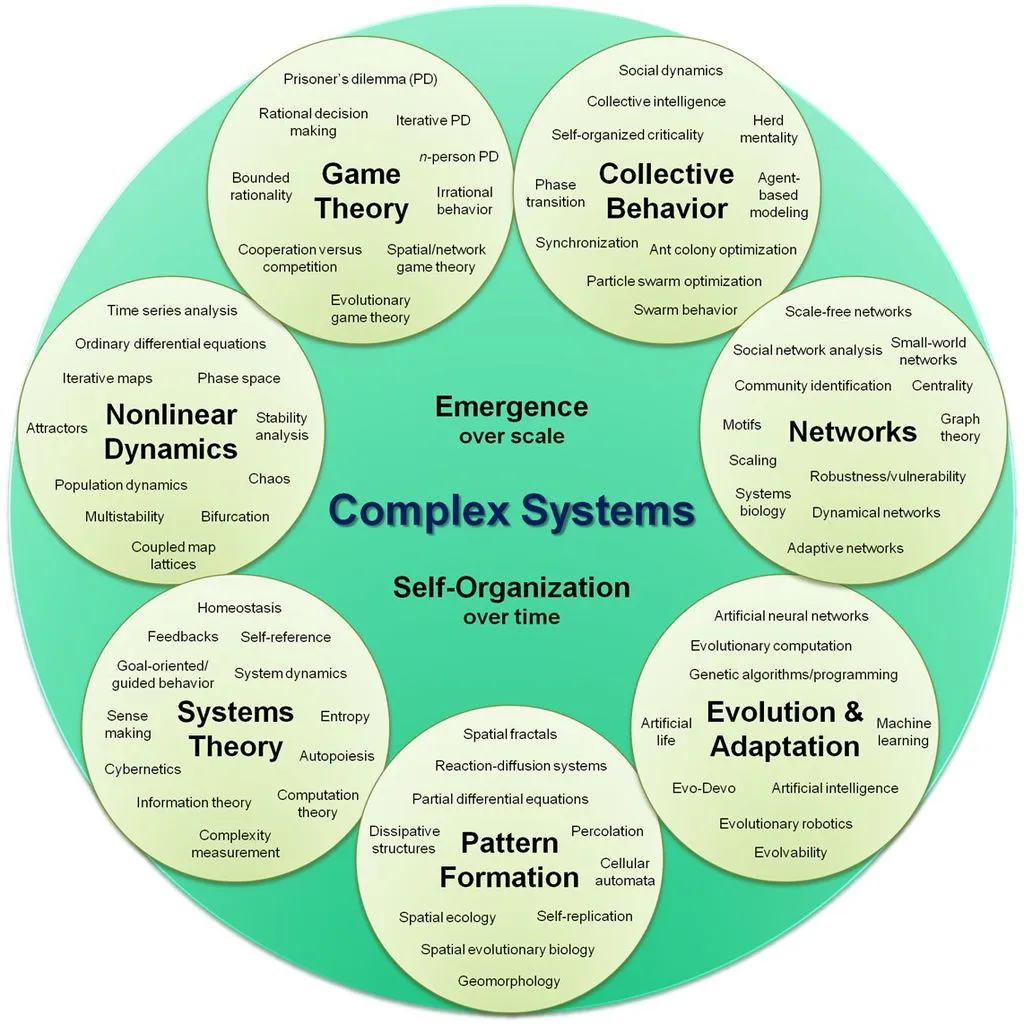 Source: medium.com
“Interconnectedness, unpredictability, and uncontrolability are key characteristics of all complex dynamic systems.
In dealing with complexity rather than mechanisms, the aim of science shifts from improving our ability to predict and control to aiming to better understand the dynamics and relationships of the systems we participate in so that our participation can be more appropriate.”
“The simplest definition for a complex system is any system with more than three interacting variables.”
“In Seven Life Lessons of CHAOS, John Briggs and F. David Peat unfold seven lessons for embracing some of the deeper insights of chaos theory in our daily lives:
- Be Creative: engage with chaos to find imaginative new solutions and live more dynamically.
- Use Butterfly Power: let chaos grow local efforts into global results
- Go with the Flow: use chaos to work collectively with others
- Explore What’s Between: discover life’s rich subtleties and avoid the traps of stereotypes
- See the Art of the World: appreciate the beauty of life’s chaos
- Live Within Time: utilize time’s hidden depths
- Rejoin the Whole: realize our fractal connectedness to each other and the world.”