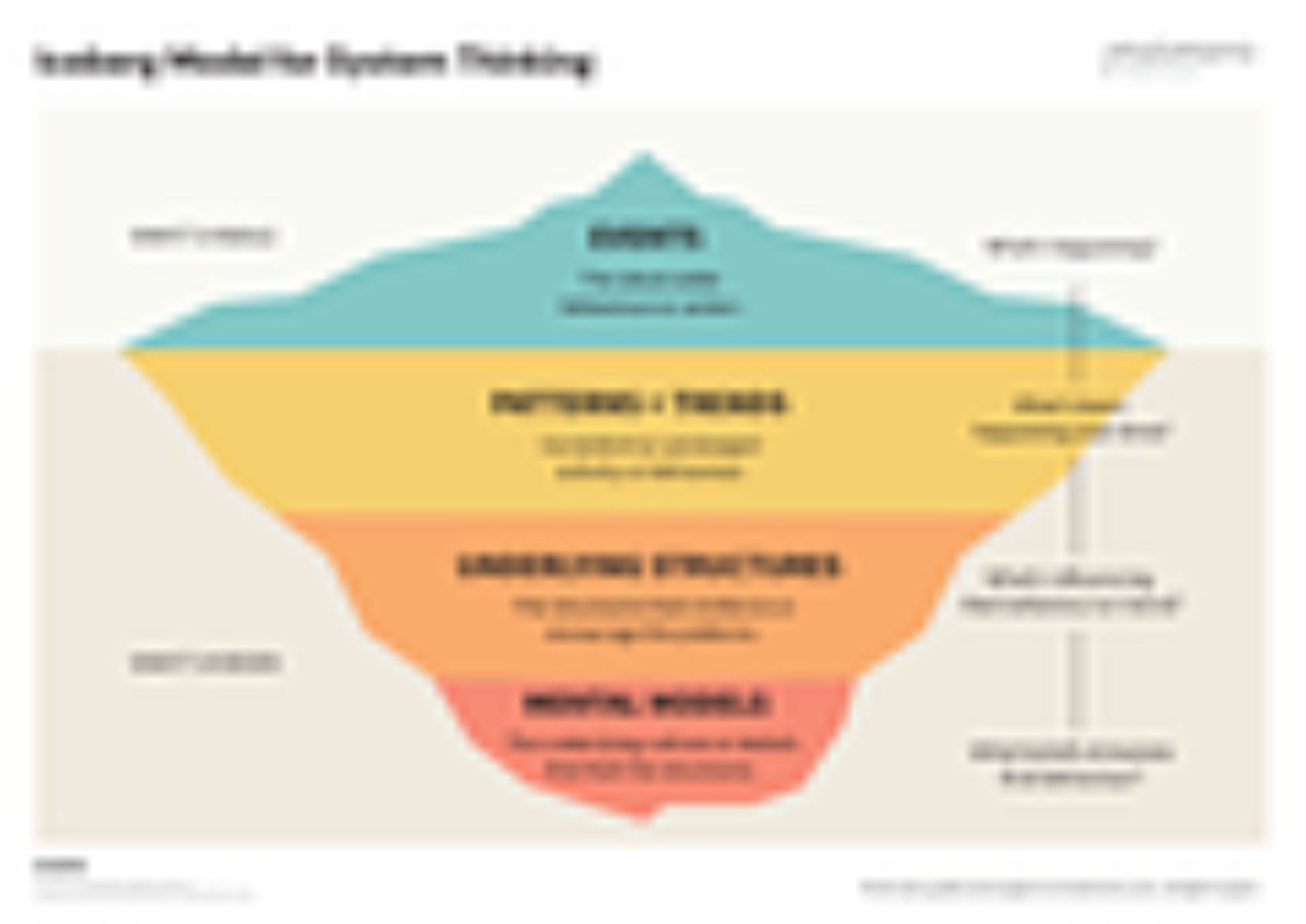
The Iceberg Model is a systems-thinking tool for looking beneath visible problems to the deeper forces that produce them. Like an iceberg, only a fraction of any system shows above the waterline; the tool invites us to descend through four levels, on the principle that each layer explains the one above it, and that intervening at the deeper, less-visible levels creates more durable change than reacting to surface events alone. It is a staple of the systems-thinking tradition, closely associated with Peter Senge’s work on the learning organisation.
 Source: mutomorro.com
Working downward, the model moves through four layers. Events are what just happened — the visible, one-off occurrences we usually react to. Patterns and Trends are what keeps happening — the recurring behaviours and trajectories that individual events, seen together, reveal. Underlying Structures are what hold those patterns in place: the policies, rules, resource flows, incentives and relationships that shape how the system behaves. Mental Models sit deepest — the beliefs, assumptions and values that quietly generate the structures above them, and the highest-leverage point at which to intervene.
Because the deepest layers are the hardest to see yet the most powerful, the tool is best used as a facilitated conversation, with a group working from the surface downward to locate the root causes of a persistent problem rather than treating its symptoms.
Also see Icebergs Of The Heart, Indigenized Iceberg model tree and Three Levels of Organisational Culture