The Just Transition Framework is a set of principles, processes and practices for a fair shift away from an extractive economy — one built on the exploitation of labour and nature — toward a regenerative economy rooted in ecological restoration, community resilience and deep democracy. It insists that moving off fossil fuels and other harmful industries be led by, and never sacrifice, the frontline workers and communities most affected by both pollution and economic change.
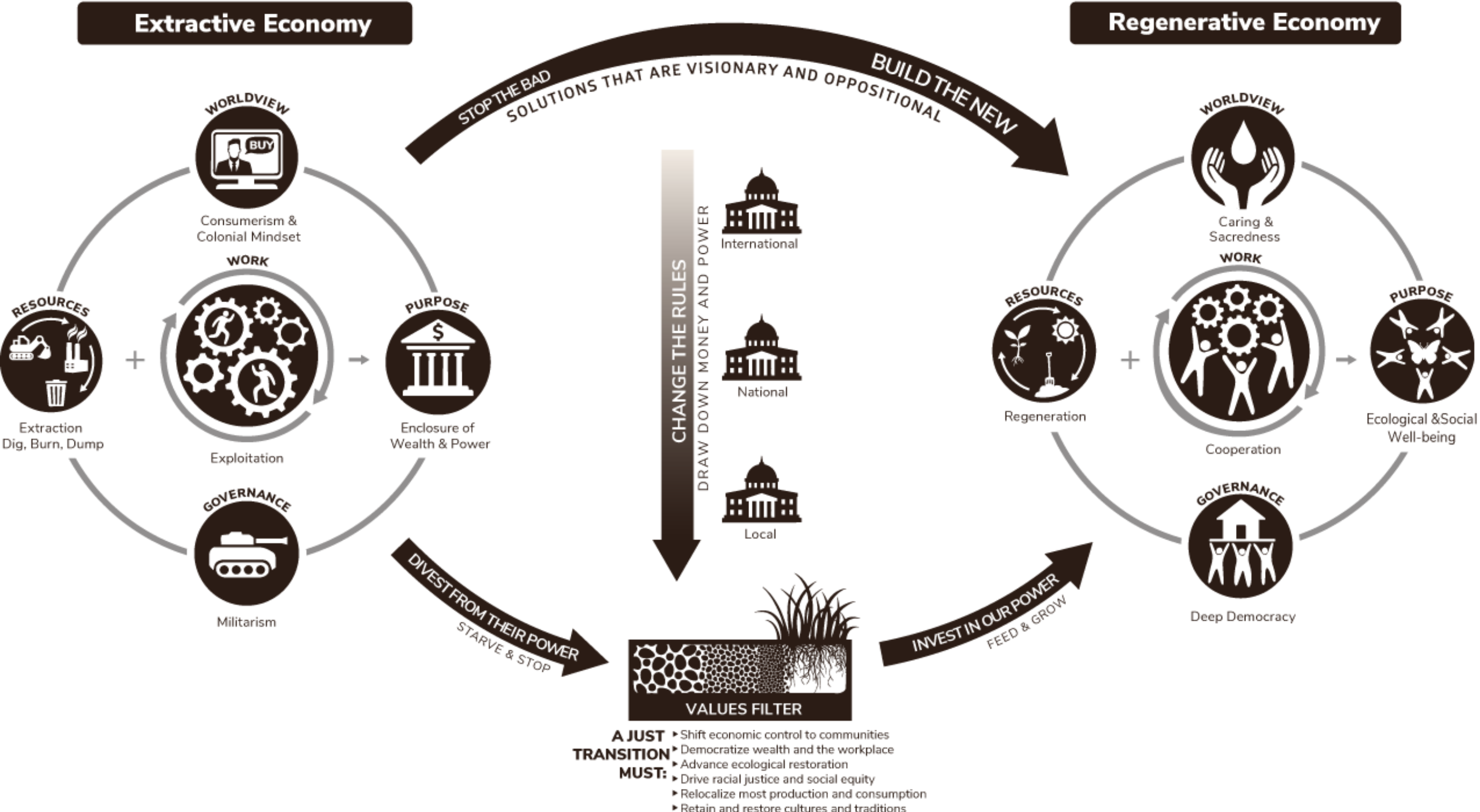 Source: climatejusticealliance.org · CC BY-NC-ND 4.0
The concept was first forged by labour unions and environmental-justice groups rooted in low-income communities of colour, who saw the need to phase out industries harming workers, community health and the planet while opening just pathways for those workers into new livelihoods. Here it is drawn from the Climate Justice Alliance (formed 2013), which frames Just Transition as vision-led, unifying and place-based — a way of building economic and political power rather than simply swapping one energy technology for another.
Central is the insistence that the transition must itself be just: “If the process of transition is not just, the outcome will never be.” That means redressing past harms through reparations, redistributing resources and decision-making power, and centring the leadership and full human development of communities on the front lines — approaching production and consumption holistically, and treating a fair process as inseparable from a fair outcome.
Also see Prefigurative politics